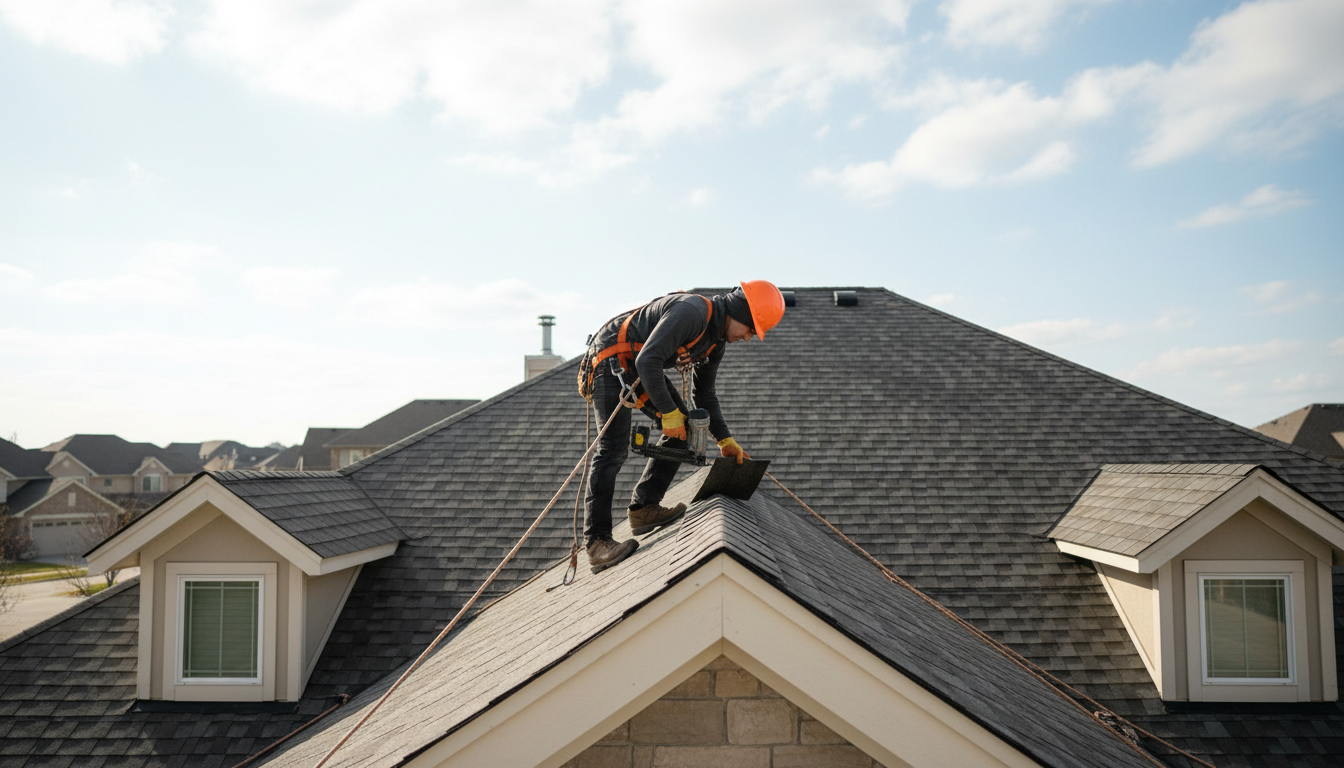
To understand how to choose a roofing company, prioritize verifying the contractor's licensing, insurance, and manufacturer certifications to ensure professional quality. Homeowners should review detailed written contracts and ask specific questions about warranties and project supervision before signing any agreements. Checking local reviews and avoiding high-pressure sales tactics are also essential steps in hiring a trustworthy roofing professional.
The stress of a leaking roof or hail damage is overwhelming, but the anxiety of choosing the wrong contractor often feels even worse. In Texas, where the roofing industry lacks state wide licensing, homeowners are frequently left vulnerable to poor workmanship or outright scams. Your home represents a massive financial investment, and its protection should not be left to chance or a door to door solicitor. We understand that local expertise and a deep knowledge of restoration are the only ways to ensure your property is restored to its proper value. In this guide, we will examine the specific legal landscape of Texas roofing, the essential questions you must ask every candidate, and how to navigate the insurance claim process without being taken advantage of by storm chasers. You will gain a clear checklist to help you select a partner who prioritizes quality over speed.
Why Choosing a Roofing Company in Texas is Different
Understanding the Texas market is essential when learning how to choose a roofing company because the regulatory landscape is fundamentally different here than in most other states. Texas does not require a mandatory state-issued license for roofing contractors. This lack of statewide oversight places the entire burden of proof on the homeowner to verify that a contractor is legitimate, skilled, and insured. In a state prone to severe weather, this regulatory gap creates a significant risk for those looking for roofing services in Sherman or the broader Metroplex.
Because there is no state database to check, voluntary certifications become the gold standard for quality. Organizations like the Roofing Contractors Association of Texas (RCAT) offer a voluntary licensing program that requires contractors to pass rigorous examinations and demonstrate financial stability. For reputable DFW roofing contractors, holding an RCAT license or specialized manufacturer certifications proves they are committed to professional standards that the state does not technically require.
This environment is particularly challenging in North Texas, stretching from Sherman to the heart of the DFW Metroplex, where storm season frequently attracts fly-by-night operations. These transient crews often disappear once the job is finished, leaving homeowners with no recourse for warranty issues or future leaks. Local roots and voluntary credentials are your only real safeguards in a market where anyone with a ladder and a truck can claim to be an expert.
Do Roofers Need a License in Texas? Understanding the Legal Landscape
This lack of a central registry often leads to a common question for homeowners: do roofers need a license in Texas? The short answer is no, not at the state level. While other trades like plumbing or electrical work require state-issued licenses, roofing remains unregulated by the state government. Because there is no official database to consult, you must look for specific indicators of professional legitimacy when determining how to choose a roofing company.
Reputable contractors establish their credibility through local accountability and third-party validation. Even without a state license, a professional company will always pull the necessary permits required by municipalities like Sherman, McKinney, or Allen. They should also provide a physical business address within the North Texas area. A contractor operating solely out of a truck with a temporary out-of-state phone number is a major risk, as they lack the local ties necessary to honor long-term warranties.
Beyond local permits, look for specialized manufacturer certifications from industry leaders such as GAF or Owens Corning. These manufacturers have their own rigorous vetting processes, requiring contractors to maintain high levels of insurance and consistent installation quality to earn their stamps of approval. Furthermore, a company with deep insurance claim expertise will be able to provide detailed documentation that satisfies both local building codes and carrier requirements. Verifying these credentials manually, by calling the manufacturer or checking local building department records, serves as your best defense in a state without mandatory licensing.
Questions to Ask a Roofer Before Signing a Contract
After establishing that Texas does not mandate a state license, the responsibility shifts to the homeowner to conduct a thorough interview. Determining how to choose a roofing company involves moving beyond basic estimates and looking for proof of professional standards. Use the following questions to vet a contractor before any shingles are delivered to your driveway.
"Are you insured with both general liability and workers compensation?" Insurance is non-negotiable. General liability covers damage to your property, such as a fallen limb or a broken window. Workers compensation is equally vital; it protects the homeowner from being held liable for medical expenses or lost wages if a worker is injured on the job. A professional company will provide a current certificate of insurance upon request. Many transient contractors skip workers comp to save on overhead, leaving the homeowner at significant financial risk.
"Do you offer a workmanship warranty in addition to the manufacturer warranty?" Shingle manufacturers only cover material defects. Most roof leaks are actually caused by improper installation, which manufacturer warranties usually do not cover. A trustworthy contractor provides a separate, written workmanship warranty that guarantees the quality of the labor. This shows they stand behind their craftsmanship long after the job is finished.
"Can you provide three local references from the last six months?" Reliable roofing services in Sherman should be able to point to local homes where they have recently completed work. This demonstrates they have an active, satisfied local customer base and are not just passing through the area after a storm. Requesting recent references ensures the current crews are performing at a high level.
Topic | Good Answer (Green Flag) | Vague Answer (Red Flag) |
|---|---|---|
Insurance | Provides hard copies of GL and Workers Comp policies. | "We are fully covered," without providing paperwork. |
Point of Contact | Names a specific on-site project manager with a direct number. | "Someone will be around," or generic office lines. |
Materials | Uses recognized brands and demonstrates insurance claim expertise. | Recommends generic or off-brand materials to cut costs. |
Honesty in these answers is the hallmark of DFW roofing contractors who operate with integrity. If a contractor hesitates or gives vague promises instead of written proof, it is a clear sign they may lack the professional infrastructure to support your project long term.
How to Pick a Roofer for an Insurance Claim
Selecting a contractor for storm damage requires more than just mechanical skill; it requires a deep understanding of the property insurance industry. When you are deciding how to choose a roofing company after a North Texas hail storm, look for a team that possesses specific insurance claim expertise. A professional roofer should be proficient in Xactimate, which is the industry standard pricing software used by most insurance adjusters. If your contractor and your adjuster are not speaking the same technical language regarding material costs and labor rates, you may end up with a significant funding gap that you are forced to cover out of pocket.
A reputable contractor will also offer to meet the insurance adjuster on-site during the initial inspection. This ensures that the adjuster sees every point of damage, from bruised shingles to compromised flashing. This presence is critical when discussing the 25 percent rule found in many local building codes. In many North Texas jurisdictions, if 25 percent or more of a roof surface is damaged within a 12 month period, the entire roof must be replaced to meet current standards. Having a knowledgeable advocate present helps ensure the scope of work reflects these legal requirements rather than just a quick patch job.
Be mindful of how you communicate with your insurance carrier during the process. Avoid offering unsolicited opinions about the condition of your roof, such as describing it as old or poorly maintained before an official inspection occurs. These casual remarks can be used by adjusters to argue that the damage is due to wear and tear rather than a specific weather event. Let the physical evidence and your contractor's professional assessment tell the story.
Red Flags: How to Spot a Storm Chaser or Scammer
In North Texas, storm season often brings out of state storm chasers who prioritize volume over quality. A primary red flag involves the illegal practice of waiving deductibles. Texas law, specifically HB 2102, strictly prohibits contractors from paying or rebating a customer's insurance deductible. Any roofer suggesting they can absorb this cost is asking you to participate in insurance fraud. This is a significant indicator of how to tell if a roofer is scamming you, as it demonstrates a willingness to bypass the law before the project even begins.
Another warning sign is a request for the full contract price before any materials arrive or labor begins. While a small deposit for custom orders is standard, reputable contractors operate with enough financial stability to manage the initial stages of a project without demanding your entire insurance check upfront. High pressure sales tactics, such as offering a today only special price, are designed to prevent you from researching the company or checking their local reputation.
An ethical, veteran owned business like Three Crosses Roofing & Restoration relies on a reputation for integrity and professional craftsmanship rather than aggressive door knocking. If a contractor lacks a physical office in the DFW area and uses insurance claim expertise as a buzzword rather than a demonstrated skill, they likely lack the local roots necessary to support their work in the long term.
The Value of Local Expertise and Restoration Scope
Determining how to choose a roofing company requires looking beyond the shingles. In North Texas, severe weather rarely isolates its damage to a single system. Large hail and straight-line winds frequently compromise gutters, dent siding, and cause interior leaks that ruin flooring or drywall. If you hire a contractor who only replaces shingles, you are left to manage separate crews for every other trade, often resulting in scheduling conflicts and mismatched finishes.
A full-service restoration company manages the entire scope of work, ensuring that every repair is synchronized under one project and one insurance claim. This holistic approach is more efficient for the homeowner and provides a unified point of accountability. Selecting a business with deep roots in the Sherman and DFW area, rather than an out-of-state crew, guarantees that the team understands the specific wind loads and climate challenges of our region. This level of insurance claim expertise ensures that nothing is overlooked, from the initial roof inspection to the final coat of interior paint.
Final Checklist for Selecting Your Contractor
Before you finalize your decision on how to choose a roofing company, perform a final audit of the contractor’s local standing. Verify their status on the Better Business Bureau and scrutinize Google reviews for specific mentions of jobs completed in the Sherman or DFW area. A reputable company should demonstrate a consistent history of local roofing services in Sherman rather than a transient presence following a storm.
Ensure every verbal commitment is documented in a written contract, including material specifications, project timelines, and lien waivers. This paperwork protects your property and your investment. At Three Crosses Roofing & Restoration, we ground our professional craftsmanship in faith-based integrity, ensuring every neighbor receives the honest, high-quality service required for a lasting restoration. Checking these final details allows you to hire DFW roofing contractors with the certainty that your home is in capable, ethical hands.