Determining whether to roof repair or replace Texas homes depends on the system's age and total damage, as repairs are generally recommended for roofs under 40 percent of their design life. If repair expenses exceed 30 percent of the cost of a new installation or the materials are past 75 percent of their lifespan, a full replacement is the more economical long-term decision.
Homeowners in North Texas often watch spring storms roll across the horizon with a mix of awe and anxiety. Whether you are staring at a fresh water spot on your ceiling or weighing the aftermath of another intense hail season, the choice between a targeted repair and a full replacement is rarely straightforward. In our volatile climate, a wrong move can result in structural compromise or unexpected insurance denials. This guide provides the expert clarity needed to navigate the specific roofing landscape of 2026. We will examine the 30 percent cost threshold, explain how the 25 percent building code rule applies to your property, and reveal why standard shingles often fail years before their projected lifespan. You will gain a practical roadmap to protect your home while making a sophisticated, budget conscious decision for your North Texas roof.
The North Texas Dilemma: Is a Patch Enough or Is It Time for a Full Replacement?
Living in Sherman, Denison, or anywhere in the DFW area means your home is constantly under siege by the elements. Between the punishing UV exposure that bakes asphalt shingles and the high winds that sweep across the North Texas plains, our roofs take more abuse than almost anywhere else in the country. Frequent hailstorms add another layer of complexity, often leaving homeowners wondering if they can get away with a simple patch or if they are facing a total overhaul.
Deciding between a roof repair or replace Texas project is the primary dilemma for many families in 2026. On one hand, you want to protect your budget by choosing a targeted fix; on the other, you do not want to pour money into a failing system that will only leak again next season. As a veteran-owned company, Three Crosses Roofing & Restoration approaches this decision with a focus on integrity. We believe in providing honest assessments based on the actual condition of your decking and shingles.
We utilize our insurance claim expertise to help you understand the true health of your roof. If a professional repair will safely extend the life of your system, we will tell you. Our mission is to provide high quality craftsmanship without pushing for an unnecessary replacement unless it is the most practical, long term solution for your home's protection.
The 30 Percent Rule: When Repair Costs No Longer Make Sense

When weighing a roof repair or replace Texas decision, professional contractors often look at the 30 percent rule. This financial benchmark suggests that if the cost to repair your roof exceeds 30 percent of the total cost for a full replacement, the repair is no longer a sound investment. At this point, you are paying a significant premium for a temporary fix on an aging system that likely has other underlying issues.
In the Grayson County and DFW market of 2026, the math usually breaks down like this:
Service Type | Estimated Cost (2026) | Recommendation Tipping Point |
|---|---|---|
Minor Leak/Shingle Fix | $450 – $1,200 | Always Repair |
Major System Repair | $3,000 – $4,500 | Evaluate Replacement |
Full Replacement (Standard) | $9,500 – $18,000 | Best Long-term Value |
Consider a common scenario we see in Sherman. If a storm causes widespread but non-catastrophic damage that costs $3,000 to fix, but a full replacement for your specific square footage is quoted at $9,500, the repair represents over 31 percent of the total value. By choosing to replace, you gain a renewed manufacturer warranty and a significant boost to your home's resale value.
Conversely, if your issue is localized, such as a single missing shingle from high winds or a small leak around a chimney flashing, an emergency roof repair is the clear winner. These targeted fixes preserve your capital while maintaining the integrity of the existing system. We use our insurance claim expertise to analyze these numbers alongside your specific policy coverage. If the numbers do not add up, we will never pressure you into a replacement that does not make financial sense for your household budget.
Material Lifespans in DFW: Why a 20 Year Shingle Often Fails at 15
Understanding the timeline of your roofing system is just as critical as analyzing the repair costs. While a package of shingles might boast a 20 or 30 year warranty, those figures are often based on ideal laboratory conditions that do not account for the North Texas climate. In Sherman and the surrounding DFW area, our extreme temperature swings and relentless UV exposure accelerate the aging process. The sun literally bakes the oils out of the asphalt, leaving shingles brittle and prone to cracking long before they hit their official expiration date.
Material Type | Manufacturer Design Life | North Texas Reality |
|---|---|---|
3-Tab Asphalt | 20 Years | 12 to 15 Years |
Architectural | 30 Years | 18 to 22 Years |
Metal Roofing | 40 to 70 Years | 35 to 50 Years |
Homeowners should always verify the age of their roof before committing to a significant fix. If your roof has reached the last 25 percent of its expected Texas lifespan, the logic behind the roof repair or replace Texas debate shifts dramatically. Spending $1,500 to patch a 14 year old 3-tab roof is often just putting a bandage on a broken leg. The surrounding shingles are likely too brittle to be manipulated, meaning the act of installing a new patch can actually cause further damage to the aging materials nearby.
When shingles lose their flexibility, they lose their ability to shed water and resist wind. If you find yourself frequently calling for an emergency roof repair on a system that is over 15 years old, you are likely fighting a losing battle against natural degradation. In these cases, we use our insurance claim expertise to determine if the current condition warrants a full update to ensure your home remains protected through the next storm season.
Understanding the 25 Percent Rule and Texas Building Codes
Transitioning from material age to legal requirements is a critical step in the roof repair or replace Texas evaluation process. A frequently asked question we hear in Grayson County is: "What is the 25 percent rule for roofing?" Essentially, many North Texas building codes stipulate that if more than 25 percent of a roof area is damaged or being repaired within a 12 month period, the entire roofing system must be brought up to current code. This often necessitates a full replacement rather than a large patch; older systems rarely meet the latest wind resistance and underlayment standards required by municipalities today.
Homeowners must also navigate the fact that Texas does not have an automatic "matching law." This means if one slope is damaged by hail, your insurance company is not legally required to replace the entire roof just to ensure the shingles match in color or weathering. Unless the 25 percent rule is triggered or you have a specific endorsement in your policy, you could be left with a two toned roof that lowers your property value. We use our insurance claim expertise to review these code requirements and policy details; our goal is to ensure you do not end up with a mismatched system or a violation of local Sherman or Denison building ordinances.
Will Insurance Cover a 20 Year Old Roof in Texas?
Understanding how your policy handles aging materials is a critical factor in the roof repair or replace Texas decision. In 2026, many Texas carriers have shifted their approach to roofs that have surpassed the 15 or 20 year mark. The difference largely comes down to Replacement Cost Value (RCV) versus Actual Cash Value (ACV). An RCV policy is designed to cover the full cost of a new roof at current market rates, minus your deductible. Conversely, an ACV policy only pays out the depreciated value of your shingles.
Policy Feature | Replacement Cost Value (RCV) | Actual Cash Value (ACV) |
|---|---|---|
Payout Basis | Current market cost for new materials | Depreciated value based on age |
Out-of-Pocket | Deductible only | Deductible plus depreciation gap |
Age Sensitivity | Usually consistent until 15 to 20 years | Value drops every year |
If your roof is 20 years old, an ACV payout might cover less than 30 percent of the actual replacement cost. The carrier considers the materials to be at the end of their useful life; therefore, they only pay for the value remaining. Waiting until a major storm hits to address a failing system can be a costly mistake. If the insurer determines the roof was already in poor condition due to age before the storm, they may deny the claim or provide a settlement that barely covers a minor patch.
Navigating these age related hurdles requires professional insurance claim expertise. We help homeowners review their declarations page to identify if they have been moved to a depreciated schedule. Identifying these risks early allows you to look into financing options and replace the system before a catastrophic failure leaves you underinsured.
Five Signs Your Roof Needs an Immediate Replacement
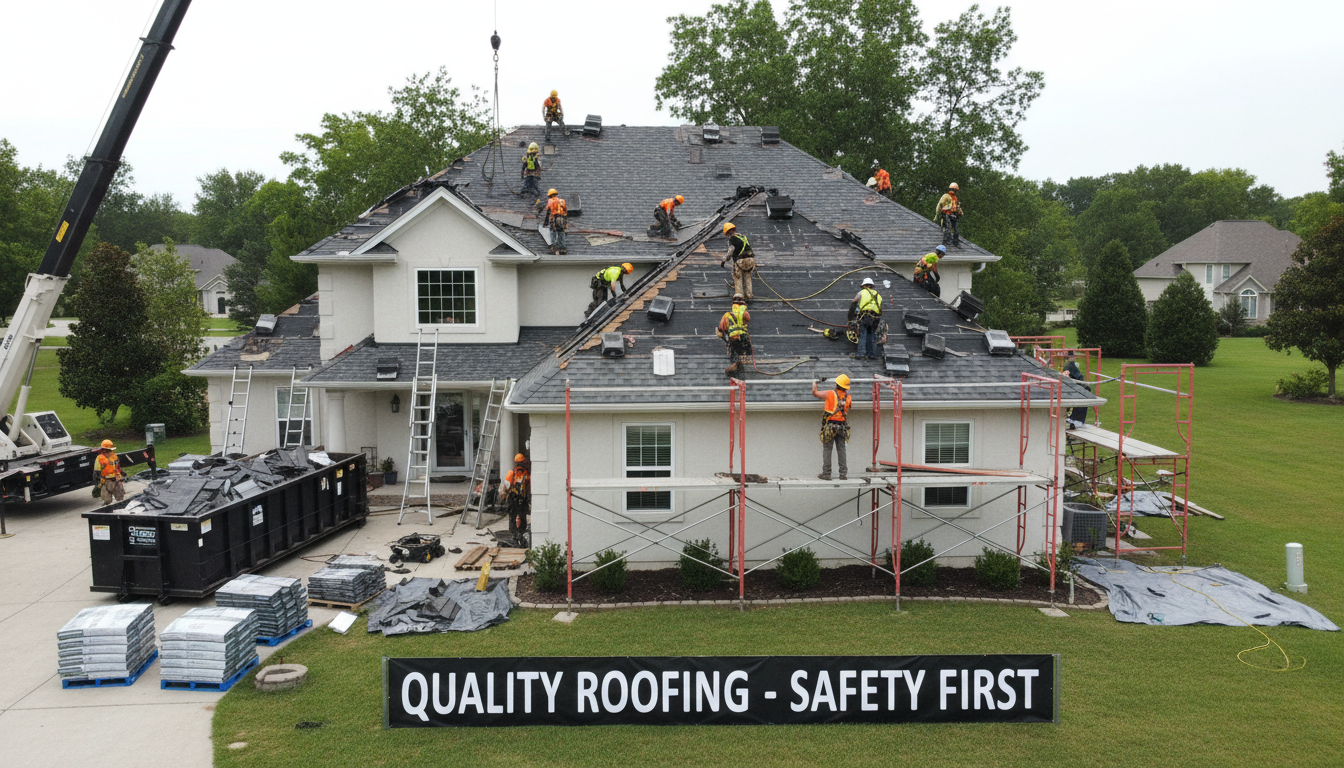
Transitioning from insurance logistics to the physical condition of your shingles helps clarify the roof repair or replace Texas choice. While a single leak might just need a technician and a tube of sealant, certain structural failures indicate the system has reached a terminal state. Ignoring these red flags often leads to cascading costs involving interior drywall, paint, and flooring restoration.
Red Flag | Visual Indicator | Underlying Problem |
|---|---|---|
Granule Accumulation | Heavy sediment or "sand" in gutters | Asphalt has become brittle and lost UV protection. |
Distributed Leaks | Multiple damp spots in different rooms | Widespread underlayment failure or multiple penetrations. |
Roofline Sagging | Dipping or "waves" in the ridge or slopes | Potential structural damage to decking or rafters. |
Shingle Deformity | Curled, cupped, or "clawed" edges | Thermal shock or moisture trapped in the attic. |
Attic Daylight | Seeing sky through the rafters | Significant wood rot or severe shingle displacement. |
Seeing daylight in your attic or noticing a sagging roofline are critical warnings that your home’s structural integrity is at risk. For these specific issues, an emergency roof repair acts only as a temporary bandage. Continued patching of a system with widespread curling or granule loss invites water to seep into your home, eventually requiring expensive mold remediation and restoration work. If these signs are present, exploring financing options for a full replacement is the most responsible way to protect your property and your family.
Cost Expectations for 2026: Budgeting for Your North Texas Roof
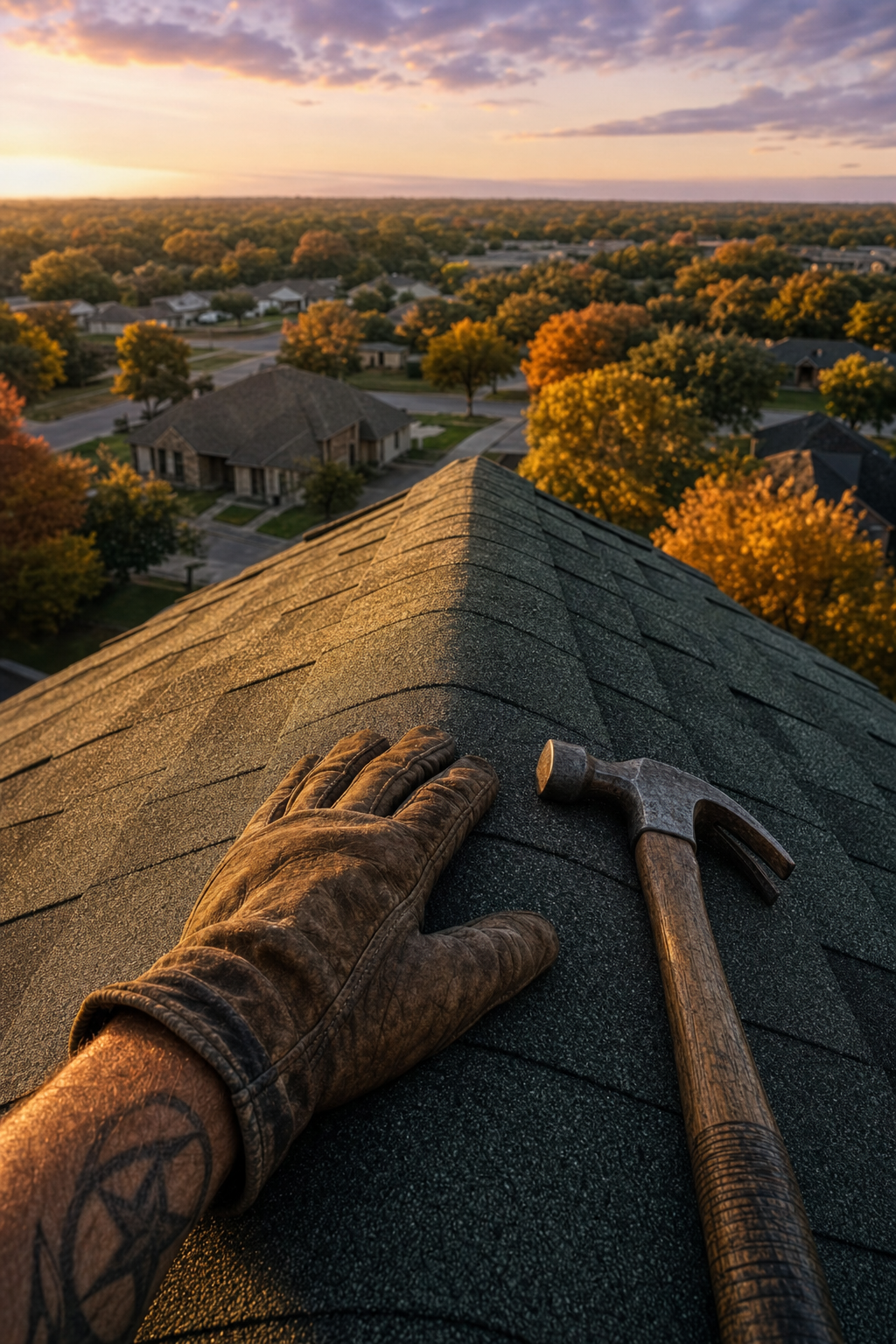
Pricing in 2026 for the Sherman and Denison area reflects current labor availability and material transport costs. For a standard residential home in Grayson County, a full asphalt shingle replacement typically ranges from $9,500 to $18,000. These figures fluctuate based on the total square footage, the steepness or pitch of the roof, and the complexity of the architectural transitions. In contrast, an emergency roof repair for a localized leak usually falls between $400 and $1,500.
Service Category | Typical 2026 Price Range | Key Factors |
|---|---|---|
Minor Leak Repair | $400 – $800 | Flashing, pipe boots, or single shingles. |
Major Structural Repair | $900 – $1,500 | Multiple leak points or valley work. |
Standard Replacement | $9,500 – $18,000 | Square footage, pitch, and material choice. |
Deciding between a roof repair or replace Texas project requires looking at the total financial picture. If your current policy is ACV or carries a high wind and hail deductible, a sudden replacement can be a significant upfront investment. We provide financing options to help bridge this gap, ensuring homeowners do not delay critical work. Postponing a replacement often leads to secondary water damage in the attic and living spaces; this increases the restoration costs and complicates the insurance claim expertise needed to bring your home back to pre-storm condition. Investing in a timely replacement preserves the structural integrity of your property while preventing the compounding expenses of interior restoration.
Choosing the right path for your North Texas roof involves weighing the immediate costs of repairs against the long term value of a full replacement. Whether you are dealing with recent storm damage or general wear, making an informed choice ensures your home remains secure. If you want expert help evaluating your options or managing insurance Claims, our team can offer the guidance you need. We are dedicated to helping local homeowners find the most reliable and cost effective solutions for their specific needs.