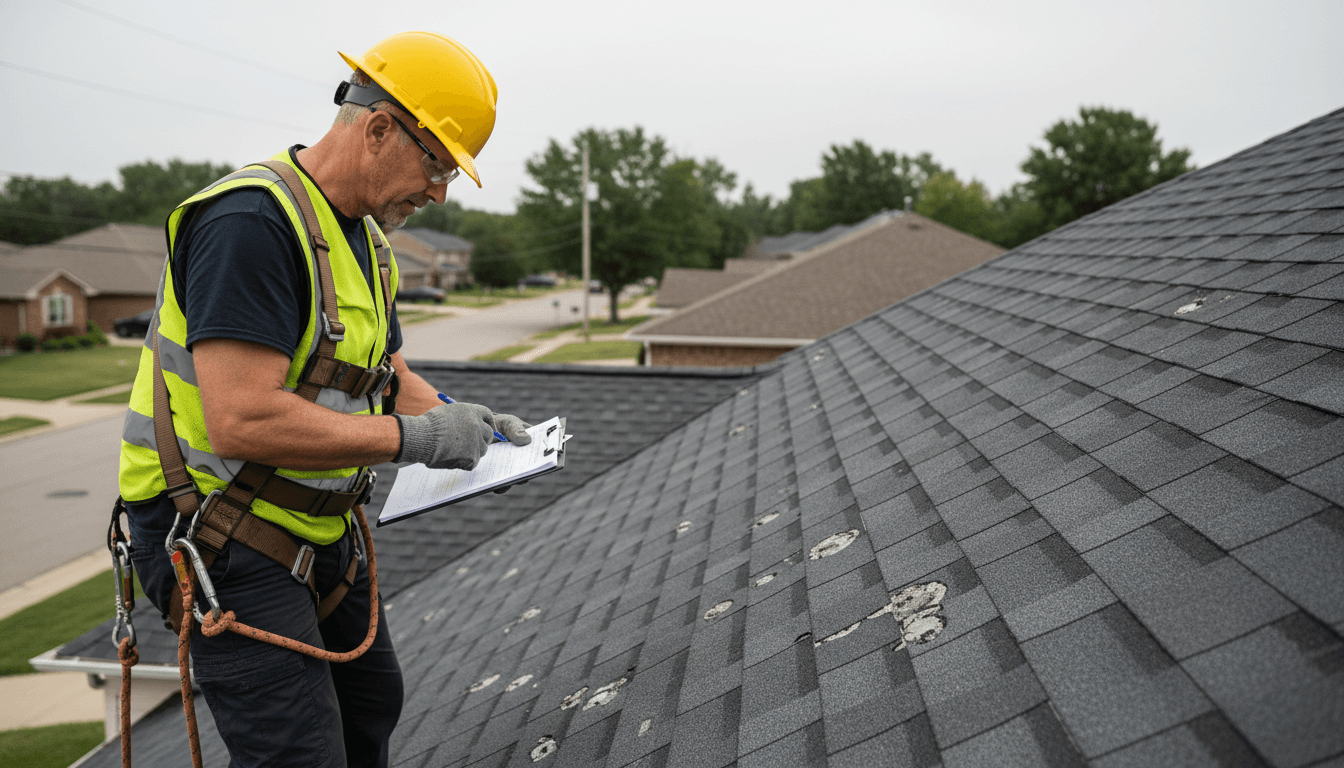
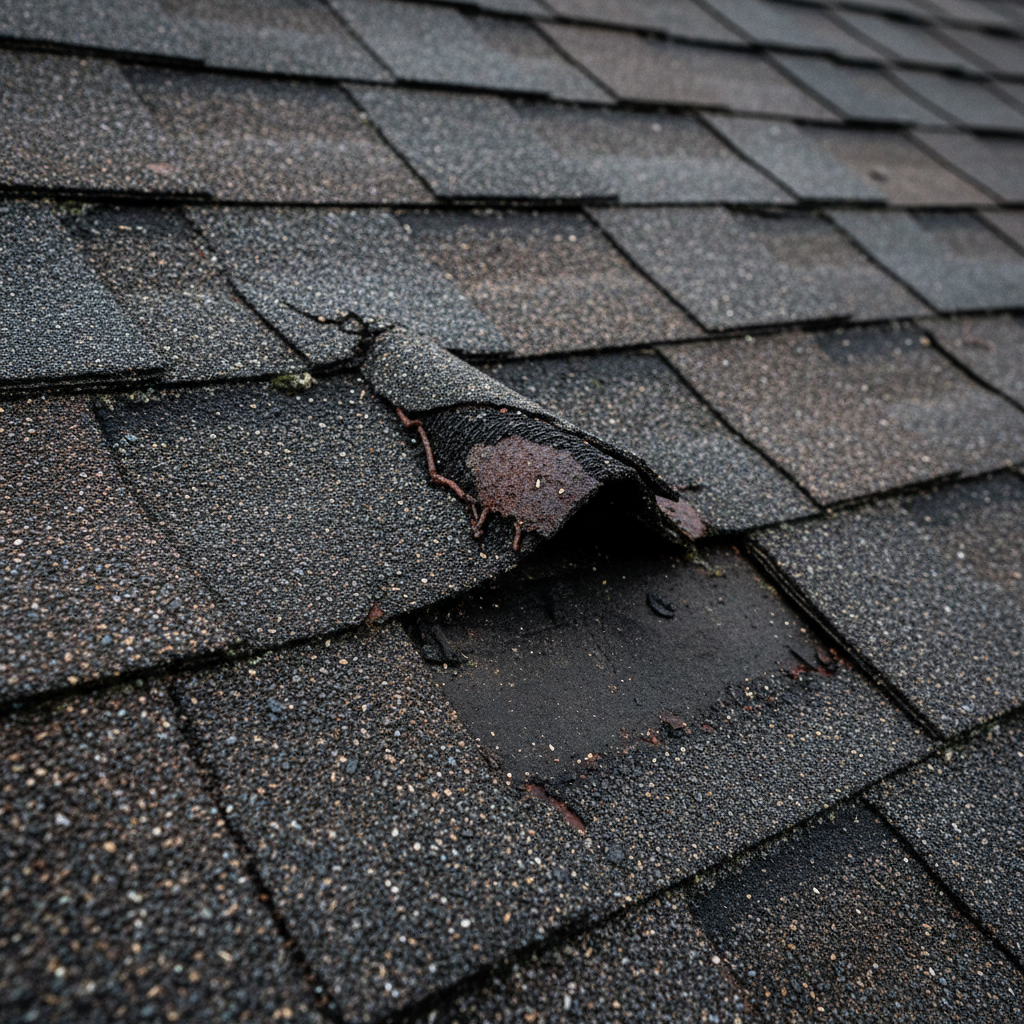
Hail damage on a roof typically appears as dark, circular bruises or indentations where protective granules have been knocked away from shingles. You may also notice shiny spots on metal vents, cracked shingles, or significant granule accumulation in your gutters. Knowing what does hail damage look like on a roof is essential for identifying storm impact before it leads to leaks or costly structural issues.
After a North Texas hailstorm passes, the immediate relief often turns into a lingering concern about the integrity of your roof. You might glance up from the driveway and see shingles that look perfectly intact, yet the most significant threats often remain hidden to the untrained eye. Ignoring these subtle signs can lead to accelerated granule loss, moisture intrusion, and eventual structural failure that compromises your entire home. This guide provides a professional look at exactly what hail damage looks like on a roof, from distinct impact bruises to subtle dents in metal flashing. We will also explore ground level indicators and offer practical advice for navigating the Texas insurance claim process; ensuring you have the expertise needed to protect your investment before the next storm arrives.
The Silent Threat: Why Hail Damage is Hard to Spot from the Driveway
In North Texas, residents are accustomed to the sudden violence of spring supercells. After the sirens stop and the sun comes out, most homeowners walk to the curb, look up at their shingles, and if they do not see anything torn or missing, they assume they dodged a bullet. This is a dangerous misconception. Hail damage is rarely dramatic from a distance; it is a granular, structural failure that is almost entirely invisible from the driveway.
When homeowners ask what does hail damage look like on a roof, they often expect to see punctured shingles or gaping holes. In reality, hail typically creates small, dark bruises where the protective ceramic granules have been knocked away, exposing the fragile asphalt mat beneath. As a veteran owned company providing Sherman roofing services, we have seen how these subtle fractures allow UV rays to bake the asphalt, eventually leading to a failure that does not manifest as a leak for months or even years.
Waiting until you see a water stain on your ceiling means you have waited too long. By the time a leak occurs, the integrity of your roof decking is often compromised, and you may have missed the window for a straightforward claim. Our team at Three Crosses Roofing & Restoration uses our insurance claim expertise to identify these silent threats before they turn into costly restoration projects.
Visual Indicators: What Does Hail Damage Look Like on a Roof?

Identifying exactly what does hail damage look like on a roof requires a shift in perspective. On a standard asphalt shingle, the damage presents primarily as a "bruise." These are dark, circular impact marks where the protective ceramic granules have been dislodged by the force of the ice. Homeowners often expect to see a puncture or a hole, but functional damage is usually more subtle. The hail strike creates a localized compression zone, stripping away the outer layer and exposing the black, bitumen-saturated fiberglass mat underneath.
This exposed mat is the primary waterproofing layer of your roof, but it is highly susceptible to UV degradation. Once the granules are gone, the sun begins to bake the asphalt, causing it to become brittle and eventually crack. Over time, these small bruises expand into leaks. During a professional inspection, our team looks for these specific patterns across the entire slope. If you were to press your thumb into one of these impact marks, it would often feel "spongy" or soft, indicating that the internal structure of the shingle has been fractured by the strike.
It is vital to distinguish these impacts from "blistering," which is a common form of heat damage or a manufacturing byproduct found on older roofs in North Texas. Blistering occurs when moisture trapped in the shingle expands, creating small bubbles that eventually pop. The key difference lies in the edges. Blisters have sharp, crisp edges where the granule loss occurred from the inside out. In contrast, hail impacts are irregular and have soft, indented edges caused by external force.
Distinguishing between these two requires the kind of insurance claim expertise that we prioritize at Three Crosses Roofing & Restoration. We ensure that adjusters do not mischaracterize legitimate storm damage as simple wear and tear. By documenting the specific, irregular characteristics of these impacts, we provide a clear record that helps secure the coverage necessary for a proper restoration.
Checking the Ground Level: The Best Clues You Have Hail Damage
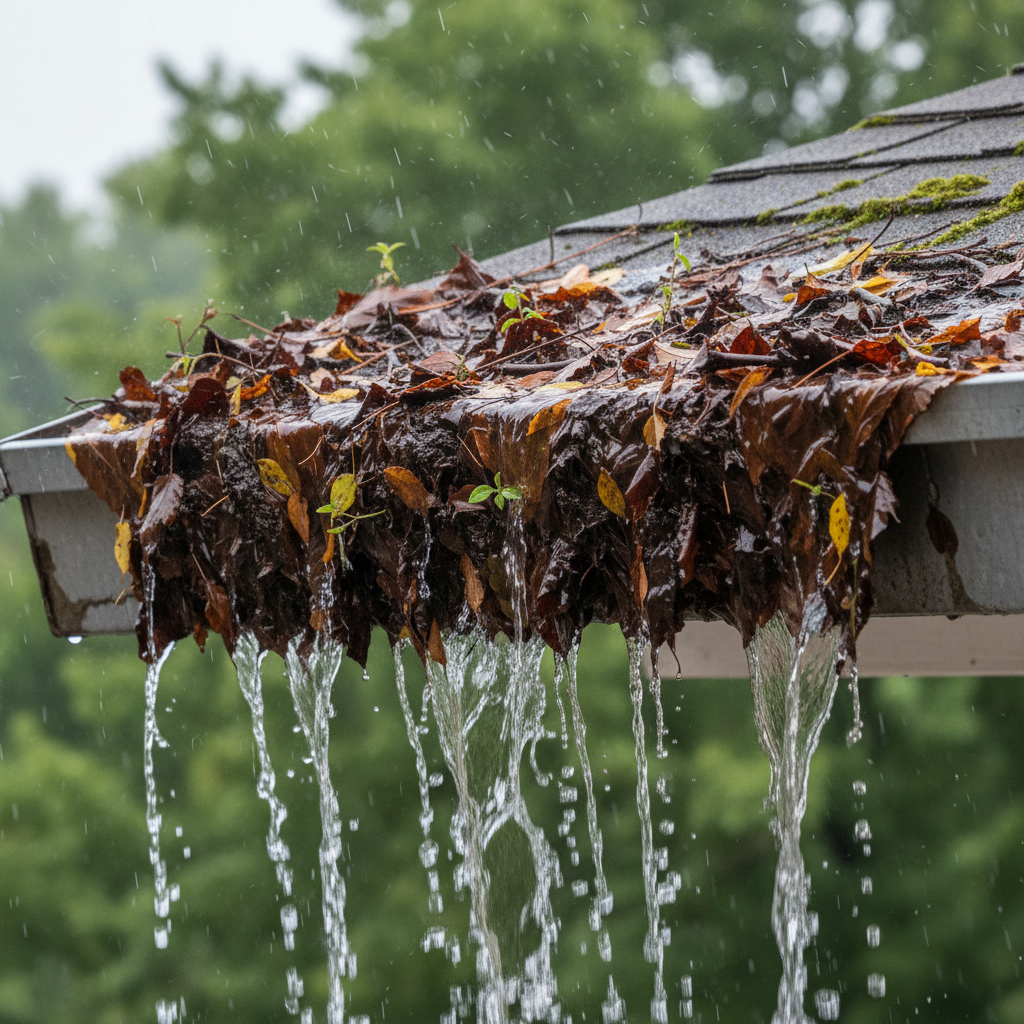
While we never recommend that homeowners climb onto a steep pitch to investigate, you can gather significant evidence from the safety of your lawn. In Sherman neighborhoods like Austin Landing or the historical districts near downtown, the first place to look is your periphery. High velocity ice leaves clear signatures on collateral items that are much easier to inspect than shingles. When you are trying to determine what does hail damage look like on a roof without leaving the ground, these indicators provide a reliable map of the storm's intensity.
Start by examining your gutters and downspouts. If you see small dings or circular indentations along the metal, it is a high probability indicator that your shingles sustained similar impacts. Next, look at your AC condenser unit. The thin aluminum fins on these units are incredibly fragile; even moderate hail will flatten or deform them, which can restrict airflow and lead to mechanical failure.
One of the most telling signs involves your privacy fence. Look for splatter marks or clean spots on the wood. When hail hits a weathered fence, it cleans off the gray oxidation, leaving a bright, circular mark of raw wood. This confirms both the size and the direction of the storm. Finally, check the exit points of your downspouts. While a small amount of granule loss is normal for aging Sherman roofing services, a hailstorm will often strip a significant volume of protective surfacing at once. Finding a concentrated pile of ceramic granules at the base of your drainage system is a clear signal that the roof mat is now exposed. Identifying these ground level clues is the first step in utilizing our insurance claim expertise to build a case for a full restoration.
What Size Hail Will Damage a Roof in Sherman, Texas?
Homeowners in Grayson County often assume that unless the ice is the size of a golf ball, their shingles remain intact. While the insurance industry frequently uses one inch, or quarter-sized hail, as a standard threshold for damage, this metric is deceptive. In North Texas, the damage potential is determined by a combination of stone size, wind velocity, and the current condition of the shingle.
North Texas supercells frequently generate high-velocity winds that turn even small, pea-sized hail into dangerous projectiles. When hail is driven horizontally by 60 mph gusts, it strikes with significantly more kinetic energy than a larger stone falling vertically in a calm storm. This is why a ten year old roof in the DFW area can sustain functional damage from stones that look relatively harmless on the lawn.
The age of your materials is the final variable. As asphalt shingles age, they lose their natural oils and become brittle. A newer roof might bounce back from a minor storm, but an older system in Sherman will often suffer immediate granule loss and mat fractures. Identifying what does hail damage look like on a roof requires understanding these localized factors. Through our Sherman roofing services and insurance claim expertise, we evaluate the specific velocity and impact patterns to determine if the storm compromised your home's long-term protection.
Inspecting Metal Roofs, Gutters, and Vents for Hail Dents
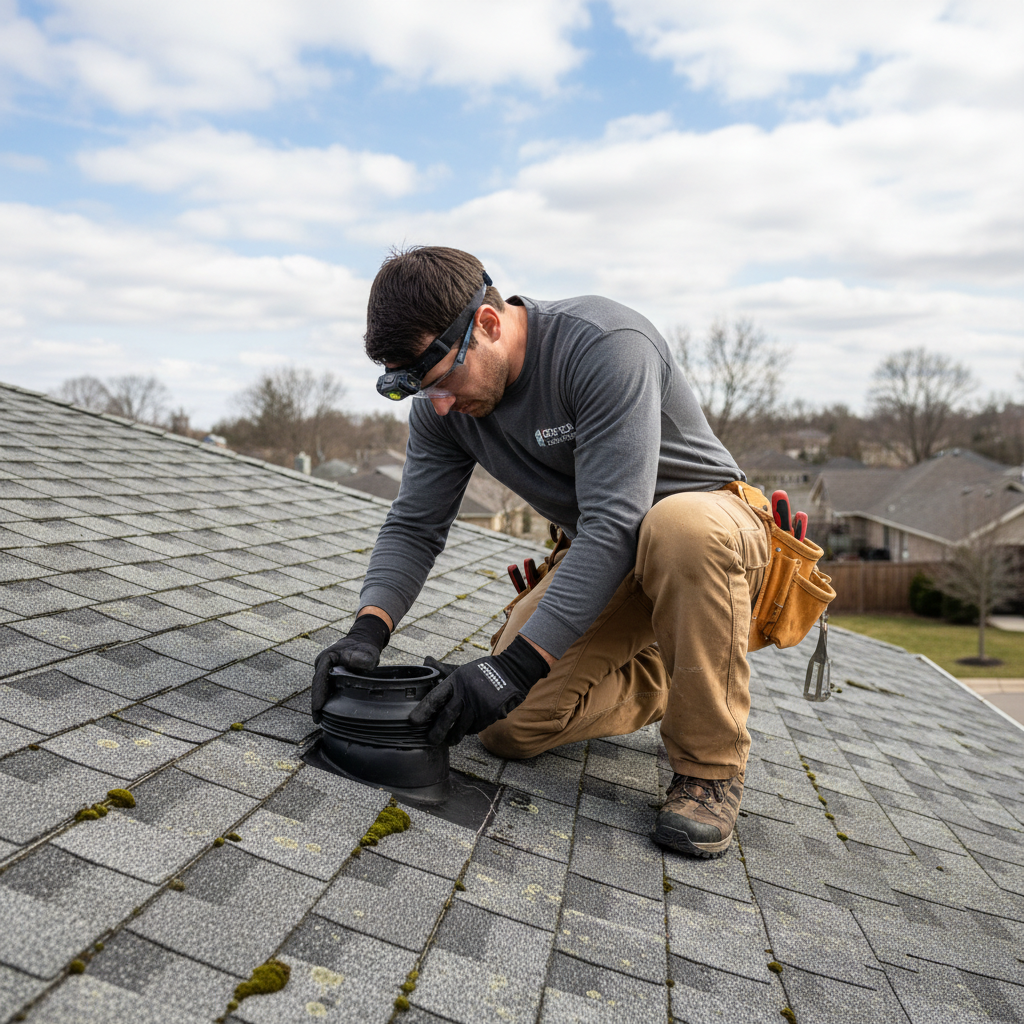
While asphalt shingles hide damage within their texture, metal surfaces provide an undeniable record of a storm’s intensity. On a metal roof, hail impacts manifest as distinct, round divots or dings. These indentations often disrupt the finish and, in some cases, can lead to coating failure or rust over time. Even if you do not have a metal roof, the soft metal components of your roofing system serve as the primary indicators for adjusters.
We often refer to box vents, turtle vents, and lead pipe boots as the "canaries in the coal mine" for storm damage. Because these components are made of thin, malleable materials, they register impacts much more readily than a resilient shingle. If these accessories are peppered with dings, it is a high probability that the surrounding shingles took the same hits. An adjuster will look at these soft metals first to establish the presence of a damaging weather event.
Beyond vents, the drip edge and gutter faces provide visible proof. Identifying what does hail damage look like on a roof becomes much easier when you see physical deformation in these secondary materials. Our team uses insurance claim expertise to document these collateral hits, ensuring that every damaged component, from the ridge vents to the downspouts, is accounted for in the restoration scope. This level of detail is a core part of our Sherman roofing services, providing homeowners with the evidence needed for a fair and comprehensive assessment.
Navigating the Texas Insurance Claim Process After a Hailstorm

Understanding the physical indicators of a storm is only the first half of the battle; the second involves successfully navigating the bureaucracy of a claim. One of the most common questions we hear from Grayson County residents is: how long after a hail storm can you claim roof damage? In the state of Texas, most policies provide a window of one to two years from the date of the loss to file a claim. However, waiting until the end of this period is a significant risk. Prompt reporting is vital, as delayed claims give insurance companies more leverage to argue that the damage resulted from gradual wear or a different, non-covered event.
At Three Crosses Roofing & Restoration, our approach centers on acting as a dedicated advocate for the homeowner. We apply our insurance claim expertise to ensure the insurance adjuster’s estimate reflects the true cost of a full restoration. A common mistake is focusing solely on the shingles. A comprehensive claim must account for all collateral damage, including bruised siding, dented gutters, and damaged window screens. If a delayed inspection allowed moisture to penetrate the decking, the claim should also address interior restoration, such as damaged flooring or drywall.
Our team coordinates with adjusters to verify that the scope of work is complete from the start. By providing localized data on North Texas storm paths and detailed documentation of the impact, we help our clients in the DFW area receive the full benefits they are entitled to under their policy. When you choose our Sherman roofing services, you are securing a partner who understands both the technical requirements of the roof and the nuances of the Texas insurance landscape.
What Not to Say to a Roof Insurance Adjuster
When the insurance adjuster arrives at your Sherman home, your primary goal is to provide factual information without accidentally compromising your coverage. It is natural to want to be helpful, but offering personal opinions on the condition of your shingles can lead to unnecessary claim denials. One of the most critical mistakes is saying, "I think the roof is just old," or "It was probably just time to replace it anyway." These statements allow adjusters to categorize the damage as wear and tear rather than a result of a sudden storm event, which is a common reason for a claim being rejected.
Avoid minimizing the situation by saying, "It is just a small leak." In the context of North Texas weather, a small leak is often a symptom of widespread structural compromise that hasn't fully manifested yet. Stick strictly to the facts; provide the specific date of the hailstorm and point out the areas where you noticed collateral damage, such as dented gutters or cracked window screens. While you may have a basic idea of what does hail damage look like on a roof, explaining technical impact patterns is best left to an expert. We strongly recommend having a contractor with insurance claim expertise present during the adjuster's walk through. This ensures that every bruise and fracture is documented correctly, preventing the insurance company from overlooking the functional damage that leads to long term failure.
The Three Crosses Difference: Professional Drone Inspections and Integrity
Having a professional advocate present during an adjuster meeting is critical, but the quality of the evidence you provide matters even more. At Three Crosses Roofing & Restoration, we utilize professional drone inspections to eliminate the guesswork and subjectivity often found in manual walkthroughs. These high resolution aerial images capture microscopic fractures and granular loss points, providing a digital map of the damage that adjusters simply cannot ignore. When trying to determine what does hail damage look like on a roof, these drones provide a clarity that the naked eye might miss, especially on steep pitches or inaccessible ridges.
As a veteran owned, faith based company, our mission is built on integrity rather than volume. We do not participate in "storm chasing" tactics that pressure homeowners into unnecessary full replacements. Our Sherman roofing services are grounded in honest assessments. In many cases, a localized repair is the most ethical and cost effective solution for a homeowner. We use our insurance claim expertise to ensure your carrier pays for exactly what is needed to restore your home's integrity, nothing more and nothing less. This commitment to transparency ensures that your restoration project is handled with the professional service and high quality craftsmanship our Sherman and DFW neighbors expect.
Spotting hail damage on a North Texas roof is often difficult from the ground, yet even small impacts can compromise your home over time. While knowing what to look for is a great first step, identifying subtle bruising or granule loss often requires a closer look. If you want expert help evaluating your property after a storm, our team is here to provide clarity. We utilize advanced Drone Inspections to capture every detail without the risk of additional foot traffic on your shingles; it is the safest way to ensure your roof remains in peak condition.