Identifying wind damage roof issues involves looking for lifted, creased, or missing shingles along with granule loss concentrated on the windward edges of your home. Once damage is spotted, homeowners should document the specific directional impact and review their insurance policy to understand how deductibles apply to storm claims. This systematic approach helps differentiate wind effects from hail impacts and streamlines the insurance filing process.
North Texas homeowners are intimately familiar with the unsettling sound of a storm front moving through the DFW Metroplex, but the true anxiety often begins once the wind dies down. While your roof may appear intact from the driveway, high velocity gusts frequently leave behind subtle, structural vulnerabilities that easily bypass the untrained eye. At Three Crosses Roofing & Restoration, we understand that failing to identify these issues early can lead to catastrophic interior leaks and compromised structural integrity. This guide provides an expert roadmap for distinguishing wind impact from standard wear or hail damage. You will learn to identify the hidden danger of broken shingle sealant strips and discover how to navigate the intricacies of the insurance claim process. We will also outline the specific evidence required to prove your case to an adjuster, ensuring your home receives the comprehensive restoration it requires.
Identifying Wind Damage to Roofs in the DFW Metroplex
North Texas weather presents a unique challenge for homeowners, especially along the corridor from Sherman down through the DFW Metroplex. The volatility of our local climate means roofs are frequently subjected to intense pressure changes and sudden, high-velocity gusts. While a fallen tree or a missing section of shingles is impossible to miss, most wind damage roof issues are significantly more subtle. For homeowners in areas like McKinney or Denison, these impacts often stem from localized microbursts that can exert immense force on specific sections of a home while leaving the neighbor’s property untouched.
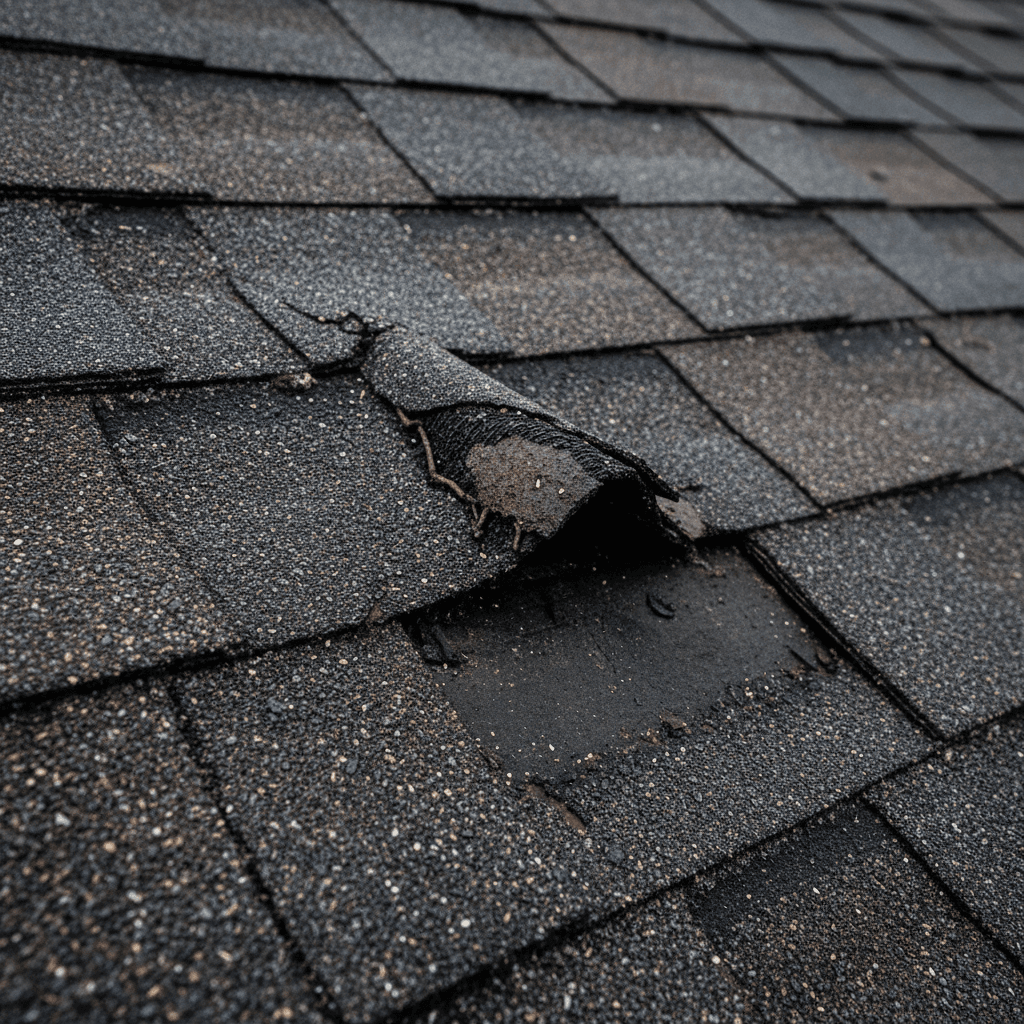
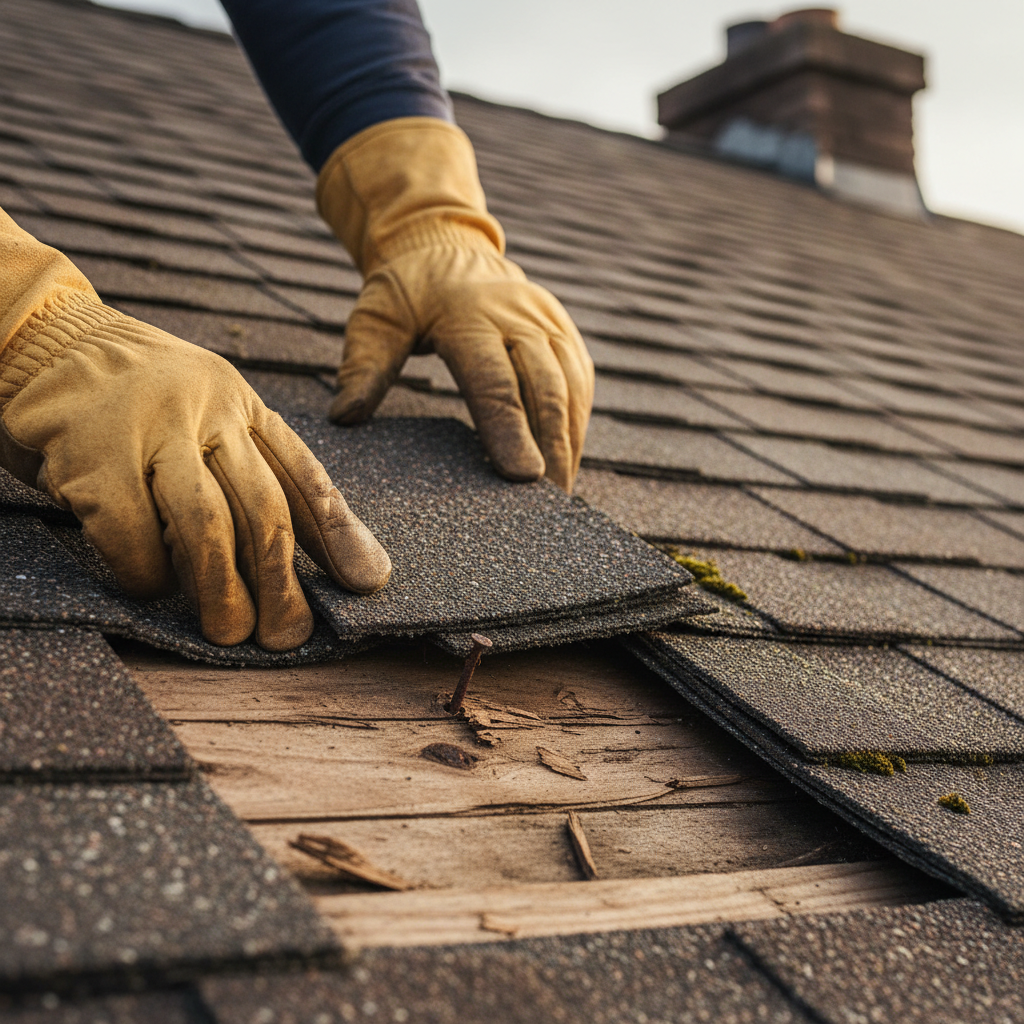
The primary indicator of this damage is the 'lift and crease' signature. When high winds sweep over a roof, they create a vacuum effect that pulls shingles upward. This force is often strong enough to break the thermal sealant strip, which is the adhesive bond that keeps the shingle flat against the one below it. Once the bond is severed, the shingle flaps upward and eventually folds back, leaving a distinct horizontal crease where the asphalt mat has been compromised. Even if the shingle settles back into place, the structural integrity is gone; the next moderate breeze will catch it again, eventually leading to a full tear-off.
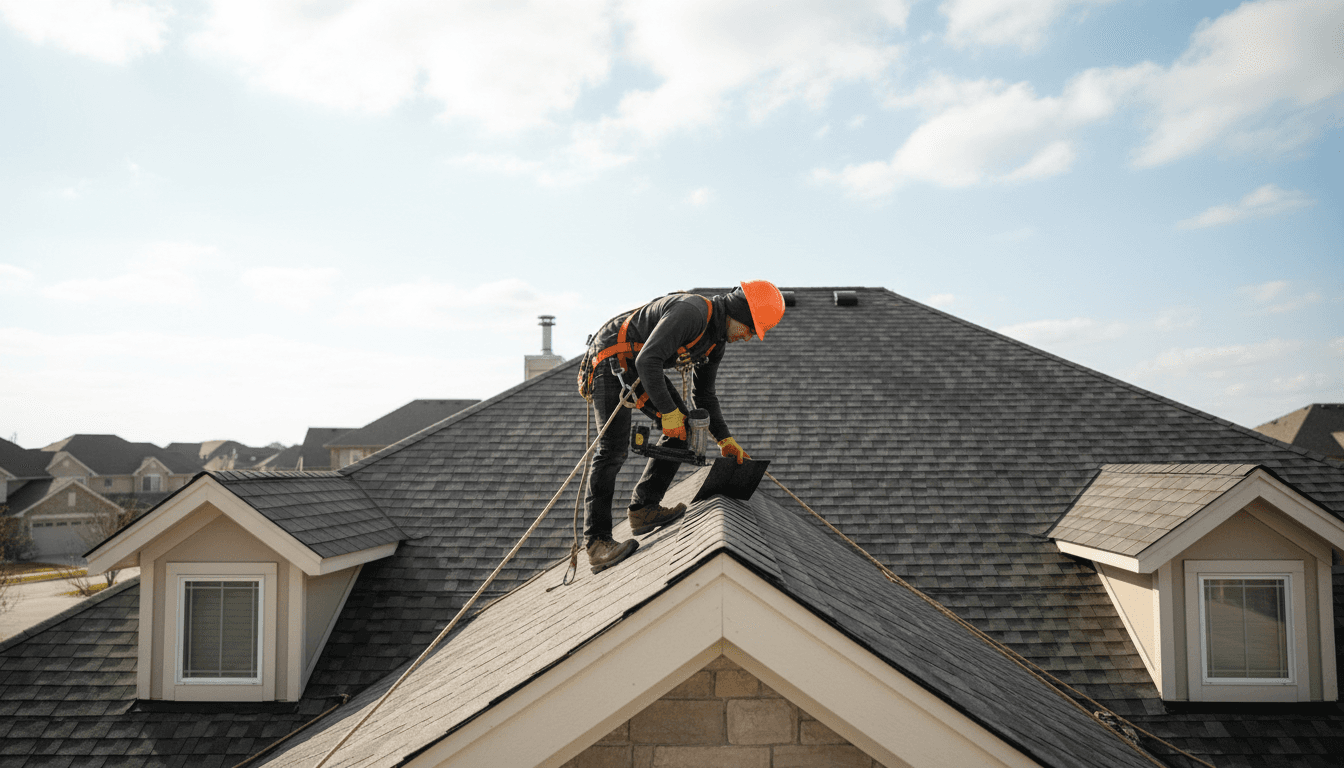
Identifying these issues early requires insurance claim expertise to ensure no subtle signs are overlooked. Because these creases are often invisible from the driveway, our team frequently utilizes drone roof inspections to get a high-resolution view of every slope. For those seeking comprehensive roofing services in DFW, understanding that wind damage is directional and often hidden is the first step in protecting your home’s envelope.
Wind Damage vs Hail Damage: How to Tell Them Apart
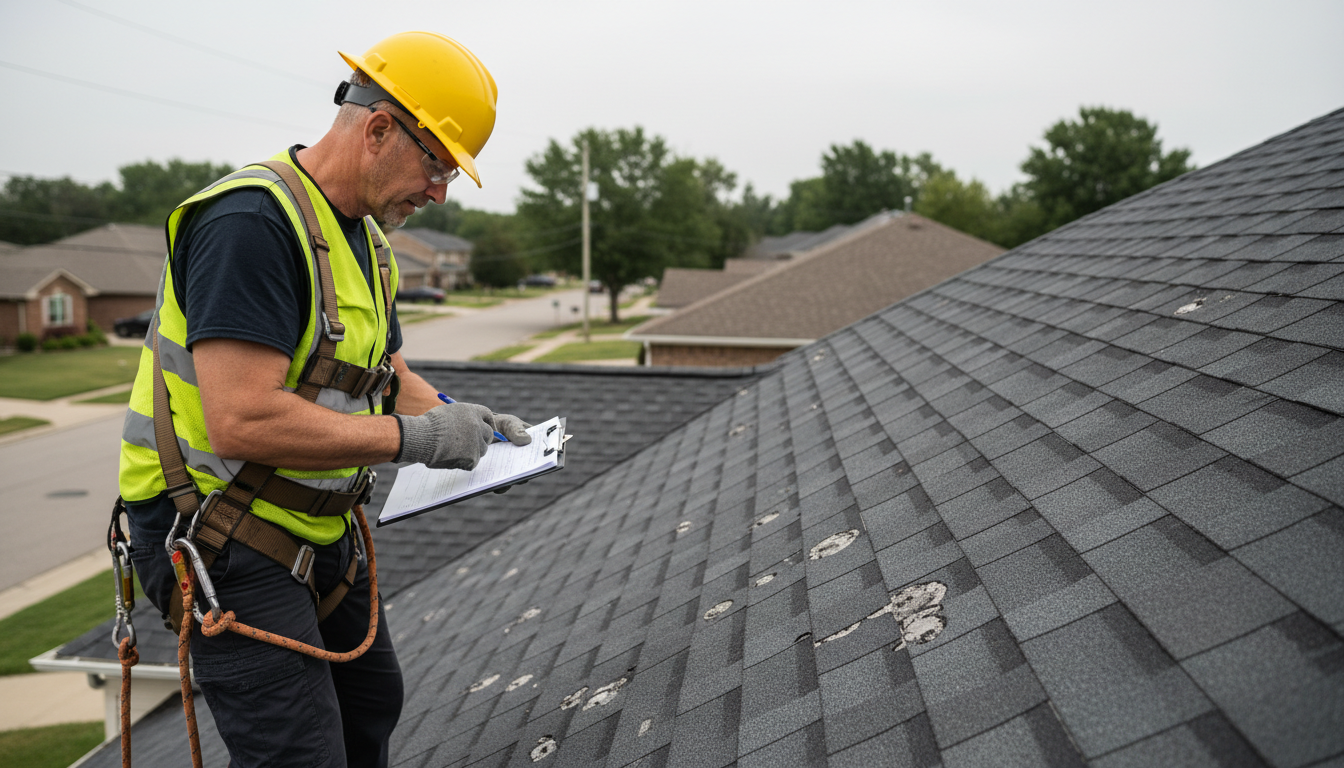
While wind creates a specific lift and crease failure, hail damage operates on an entirely different physical mechanism. In North Texas, a single supercell often delivers both, requiring a distinct eye to categorize the damage for a successful claim. Hail damage presents as random, circular bruises or indentations. These impacts literally punch the protective granules into the asphalt mat or knock them away entirely, exposing the dark, oily bitumen underneath. Unlike wind, hail impact is a top down force that creates a fractured mat, often described by adjusters as having a starburst pattern or a soft, thumb-print feel.
Wind damage to a roof is inherently directional; it primarily affects the windward side of the slope where the gust first made contact. Instead of circular bruises, you will find linear tears, missing tabs, or lifted edges. While modern architectural shingles are often warranted for speeds up to 110 or 130 mph, the sealant strips on aged roofs can begin to fail at gusts as low as 50 to 60 mph. This is why a property might have significant wind damage even if the storm did not reach hurricane-force speeds.
When our team provides insurance claim expertise, we prioritize documenting these impacts as separate line items. Insurance adjusters categorize wind and hail differently; a creased shingle is a wind line item, while a granule-loss bruise is a hail line item. Failing to distinguish between the two can lead to an incomplete scope of work. For comprehensive roofing services in DFW, it is vital to map out both types of damage across the entire structure. We often use drone roof inspections to capture the directional pattern of wind damage alongside the random scatter of hail, ensuring the adjuster receives the objective data needed to approve a full restoration rather than a simple patch.
The Hidden Danger: Broken Shingle Sealant Strips
The most insidious threat to a wind damage roof is the broken sealant strip, a failure that is almost impossible to detect from the driveway. During a North Texas storm, high-pressure winds often lift a shingle just enough to break its thermal seal without tearing it away entirely. Even if the shingle appears perfectly flat, that factory-applied adhesive bond is permanent; once it is severed, it will never re-seal on its own. This creates a gateway for wind-driven rain, where moisture is forced upward under the loose shingle, saturating the underlayment and eventually rotting the roof decking.
In the intense heat of Sherman and the surrounding DFW area, shingles become brittle over time. This loss of flexibility makes the sealant strips more prone to snapping during the volatile spring storm season. To identify these hidden failures, we perform a professional lift test. By gently applying upward pressure to the shingle tabs, our technicians can feel for the resistance of a healthy bond. This manual verification, combined with high-resolution drone roof inspections, allows us to provide the comprehensive insurance claim expertise needed to prove the roof is no longer watertight. For homeowners seeking roofing services in DFW, identifying these broken seals is the only way to prevent long-term structural decay.
Navigating the Wind Damage Roof Insurance Claim Process

Once the hidden failures of a wind damage roof are identified, the focus shifts to the administrative side of restoration. Precise documentation is the foundation of every successful claim. You must record the exact date and time of the weather event; insurance carriers verify every claim against forensic meteorological data. Providing a specific window of time ensures your report aligns with local storm surges recorded in the DFW area, which helps prevent claims from being flagged for further investigation.
Texas homeowners must be particularly aware of the Named Storm Deductible found in many modern policies. Unlike a flat deductible fee, this is often calculated as 1% or 2% of your home’s total insured value. For example, if your dwelling is insured for $400,000, a 2% deductible means you are responsible for the first $8,000 of the restoration cost. Understanding this math is vital before you decide to move forward, as the cost of a minor repair might fall below that threshold.
Local building codes in cities from Sherman to McKinney often enforce the 25 percent rule. This regulation states that if more than 25% of a specific roof slope or the total roof area is damaged, the entire roof must be brought up to current code, often requiring a full replacement rather than a targeted patch. This is a critical piece of insurance claim expertise that we bring to the table, as it often bridges the gap between a denied patch job and a fully approved roof system.
When you make the initial call to your carrier, stick strictly to the facts of the storm event. Avoid using phrases like natural aging or general wear, as adjusters can use these admissions to deny the claim. Instead, cite the specific storm date and the signs of impact found during professional drone roof inspections. For those navigating roofing services in DFW, having a veteran-owned team review the damage first ensures your claim is filed with technical accuracy and integrity.
How to Prove Wind Damage to Your Insurance Adjuster

Proving a wind damage roof claim requires more than just pointing at a loose shingle; you must provide a clear, chronological narrative of the storm event through tiered documentation. We recommend a three stage photography process to ensure the adjuster has full context. Start with wide shots of the entire property to identify the home and show the surrounding environment. Transition to medium shots of each individual roof slope to establish the directional pattern of the wind. Finally, take macro close ups of specific failures, such as horizontal creases in the asphalt mat or shingle tabs that have completely detached. These detailed images provide the visual evidence required to distinguish sudden storm impact from general weathering.
Insurance adjusters also look for collateral damage as proof of wind velocity. If a storm was powerful enough to lift shingles, it likely left marks elsewhere on the property. Document dented downspouts, torn window screens, or sections of fencing that have been blown over or loosened. These secondary indicators serve as objective proof that the wind speeds in your specific neighborhood were high enough to compromise the thermal sealant strips. For homeowners in the Sherman area, this evidence is often the deciding factor in whether an adjuster classifies a failure as a covered peril.
As a veteran owned company, Three Crosses Roofing & Restoration approaches every inspection with a commitment to integrity and technical precision. We often utilize drone roof inspections to capture high resolution imagery that adjusters find difficult to dispute. By providing this objective data alongside our insurance claim expertise, we ensure the carrier receives a comprehensive, accurate report. For those seeking professional roofing services in DFW, this disciplined approach to documentation is the most effective way to secure a fair and complete restoration settlement.
Common Reasons Wind Damage Claims are Denied and How to Respond
Even with clear evidence of a wind damage roof, carriers may issue a denial or an underpaid claim. Adjusters frequently cite improper installation, such as high nailing or inadequate ventilation, or natural aging to argue that the damage is a maintenance issue rather than a storm peril. This is particularly common in North Texas, where the relentless heat can accelerate granule loss and make shingles appear older than their actual age, giving carriers a pretext to exclude coverage.
If your initial assessment is denied or the payout is insufficient, you have the right to request a re-inspection with a different adjuster. During this process, having a contractor with insurance claim expertise present is vital. We attend these meetings to walk the roof with the adjuster, ensuring they account for all necessary line items. Often, initial estimates overlook critical components like ridge caps, starter strips, and specific flashing requirements that are essential for a code-compliant install.
When the initial settlement fails to cover the true costs of restoration, we utilize the supplement process. This involves submitting detailed photo documentation and current local material costs to the carrier to adjust the scope of work. For homeowners seeking roofing services in DFW, this professional oversight prevents you from paying out of pocket for items the policy should legally cover. A denied claim is rarely a final verdict; it is usually the starting point for a technical negotiation based on objective data.
Identifying wind damage early is the best way to protect your North Texas home from lasting structural issues. While some signs are obvious, others require a trained eye to spot correctly. If you want expert help evaluating your property or navigating insurance Claims, Three Crosses Roofing & Restoration is here to provide guidance. Our team ensures your home remains safe and your restoration process stays simple. Reach out whenever you are ready for a professional inspection.